Thursday, March 22, 2012

Gangtok

SMALL & BEAUTIFUL

All good things in life come in small packets and Gangtok is a good illustration. Be it the rich flora, the beautiful people, or the serene Buddhist monasteries, this small town, occupies an important position in the itinerary of tourists in search of tranquility from the humdrum of modern life.

LOCATION

The eastern state of Sikkim lies couched between the borders of Nepal and Bhutan. Gangtok became the capital of the state in the 19th century and lies to the south of the district of East Sikkim. It is a hilly town and spreads down the western side of a long ridge flanking the Ranipul River. The entire Kanchenjunga range can be viewed from the town and, in fact, it is worshipped as a local deity. It is at a distance of 721 km from Kolkata, 584 km from Patna, 140 km from Darjeeling and 589 km from Guwahati. The town experiences a lot of rainfall throughout the year and temperatures are mild.
 
SITES TO VISIT

One of the oft-visited sites of Gangtok is the Namgyal Institute of Tibetology. It was built in 1958 and is a research center for Mahayana Buddhism and Tibetan culture. Besides being a museum of traditional and old artifacts, one can also buy Buddhist religious books and other objects of craft. Nearby is a gompa for young lamas. The Tsuk-La-Khang or Royal Chapel is the main place of worship and assembly for the Buddhists and is huge repertoire of religious relics. It is open during the Losar festival. Another important monastery is the Enchey Gompa and is worth a visit during the festival season of January to February.

Adjacent to the Namgyal Institute is the Orchid Sanctuary, which is the home of some 500 varieties of orchids. There is a larger orchid sanctuary called Orchidarium, off the main road to Rangpo. Near White Hall, there is a Flower Exhibition Center and seasonal flowers, bonsai and orchids are a delight to the eyes. One can visit the place from April to June and September to November.

NEIGHBORING SITES

Located at a distance of 24 km from Gangtok is Rumtek Gompa, which is a rich monastery and abode of the head of the Kagyupa order of Tibetan Buddhism. It is a very famous site and devotees often flock to it throughout the year. Located at a distance of 35 km towards the northeast of Gangtok is the Tsongo or Changu Lake. Special permits are required to visit this picturesque locale.

FESTIVALS

Several festivals are celebrated in Gangtok and its adjoining areas.
•    The Buddhist festival of Bumchu is held in the Tashiding Gompa during January.
•    The festival of Chaam is held in Enchey Gompa during January-February and is marked by dancing.
•    Kagyat Dance is a mask dance held every month at Gangtok, Pemayangtse and Phodong.
•    Losar marks the Tibetan New Year and is celebrated during February-March at Pemayangtse and Rumtek.
•    Tse Chu is a Buddhist dance held in May at Rumtek.
•    Saga Dawa, held in Gangtok during May, and Drukpa Teshi, celebrated statewide during the month of July mark Buddha's first teaching.
•    Phang Lhabsol is a mask dance celebrated statewide during August.
•    Dasain, celebrated statewide during September-October, is marked by gift swapping and animal sacrifice.
 
THRILLING PASTIMES

Trekkers' huts along trek routes are at Pemayangtse, Khechopalri, Yuksam, Tsokha, Dzongri, Thangshing, Zemathang, Chaurigang, Tashiding, Varsey, Yangang, Rabongla, Sang and Sikip. One can also taste the thrill of such adventure sports like white-water rafting, hang gliding, yak safari, and mountain biking in and around Gangtok. The state tourism department can be contacted for more details.

WHERE TO GO SHOPPING

The town's liveliest markets are the New Market on MG Road, with workshops specializing in bronze and silver jewelry, and Lall Market, where dried fish, yak's cheese (churpi), and yeast for making the local beer (tomba) are available. At the huge complex run by the Directorate of Handicrafts and Handloom, on the National Highway north of the center, visitors can watch rural Sikkimese making carpets, handloom fabrics, thangka paintings and wooden objects. Curio shops on MG Road and near the Tibet hotel on Paljor Stadium Road sell turquoise, coral jewelry and beads.

HOW TO REACH

The busiest route in and out of Sikkim is the road between Gangtok and Siliguri, also the nearest airport and railway station. Flights from Bagdogra can be booked at the Indian Airlines office on Tibet Road in Gangtok (Ph: 23099). Sikkim National Tourist Agency (Ph: 22016) has daily bus services to Siliguri (5 hours), Darjeeling (7 hours), Kalimpong (3 hours) and Bagdogra (4½ hours). Shared jeeps and taxis are a faster alternative to commute.

FOODING & ACCOMMODATION

One can savor all delicacies in Gangtok-from Tibetan to Chinese, Indian to Japanese. Continental dishes, banana pancakes, chicken-fried rice and the famous momos are the hot favorites. Rice is a staple, and dal is readily available. Gyakho is a traditional soup served on special occasions. Most restaurants serve alcohol. One can also look out for tomba, a traditional drink consisting largely of fermented millet, with a few grains of rice for flavor, served in a wooden or bamboo mug, and sipped through a bamboo straw.

Gangtok also offers a wide variety for accommodation. From budgetary accommodations to five-star hotels, one can get every sort of rooms. Low-season discounts are also common, but each hotel differs in their specifications. One must remember to enquire about hot-water provisions during winters.

INFORMATION

Trekking permits for West Sikkim (i.e., north of Yuksom) can be obtained from the tourist office building. One is allowed to visit Sikkim for a maximum of 15 days and obtain an extension of another fortnight only from the Home Office (Tashling Secretariat). Re-entry into the state is not permitted for three months even if one returns before the completion of the first fifteen days. Permits can be obtained from the Indian embassy or the Resident Commissioner's Office in Delhi (Ph 6115346), Kolkata (Ph 2499935), and Siliguri (Ph 432646) or any of the Foreigners' Regional Registration Offices. In order to visit the Tsongo Lake or North Sikkim, one has to be a part of a group of four.

Bhalukpong

BHALUKPONG: A SERENE DESTINATION
The tiny town of Bhalukpong is located amongst the eastern Himalayan ranges. It is famous for its natural beauty. It has a number of picnic spots along the banks of the Kameng River. Bhalukpong is a remote destination, and like few other Indian towns, it has escaped the virtual tourist invasion in recent times. It also attracts the adventure-seeker with its numerous trekking, hiking trails and fishing stretches on Kameng River.

LOCATION

Bhalukpong is located in the southwestern part of the state of Arunachal Pradesh, in the northeastern region of India. It is adjacent to the state of Assam. It is located near the Kameng River. It is 52 km from Tezpur. The weather in Bhalukpong is alpine and pleasant. Summers (April-June) are mild, while winters are cool (November-February). It experiences southwestern monsoon rains in July-September.
THE PAST
The origin of Bhalukpong is lost in time. Local tribal rulers and rulers from Bhutan and Assam generally ruled this region from time to time. The Ahom rulers of Asom did not interfere with the local tribals, except for retaliatory raids into the tribal territory. The British had declared this area of Arunachal Pradesh as off-limits in 1873.

TOURIST SPOTS

The main places of interest in Bhalukpong are the picnic spots along the charming Kameng River and the nearby forests. Travelers can enjoy the panoramic view of the mountains surrounding Bhalukpong and its environs. There are a number of trekking and hiking trails in and around Bhalukpong. Adventure seekers can enjoy fishing and angling along different stretches of Kameng River. There is excellent scope of fishing mahsheer in the Jia Bhorali River near Bhalukpong.

SITES NEARBY

The Orchid Research Center at Tipi, 3 km from Bhalukpong, is an interesting place to visit. The best time to visit this center is between April and May, when one can see the exotic orchid collection in full bloom.

The small town of Bomdila is located north of Bhalukpong. Bomdila is known for its scenic environs and its Buddhist monasteries and apple orchards. It also attracts the adventure seeker with its numerous trekking trails.

The small town of Tawang is located beyond Bomdila amidst the eastern Himalayan ranges. It is famous for its 400-year-old monastery. This monastery is one of the biggest Buddhist monasteries to be found in India and is an important pilgrim center for the followers of Buddhism.

FAIRS AND FESTIVALS

Bhalukpong is known for its annual festival of Nyethidow, which is celebrated in the month of March.

HOW TO REACH

Bhalukpong is located in a remote part of India amongst the Himalayan ranges. It does not have an airport or railway station of its own. It is connected by road with other towns in Arunachal Pradesh and Asom. Bhalukpong can be reached from the town of Tezpur by bus or in a shared jeep.

INFORMATION

Foreign travelers visiting the Indian state of Arunachal Pradesh must obtain a Restricted Area Permit from the Foreigner's Regional Registration Offices in Delhi [Arunachal Bhavan, Kautilya Marg, Chanakyapuri, New Delhi, Mumbai (Bombay), Chennai (Madras) and Kolkata [Arunachal Bhavan, 4B Chowringhee Place, Kolkata] in order to visit Arunachal Pradesh. Permits are generally valid for 10 days. Permits can also be applied for at any overseas Indian consulates. These permits are checked at the airport and their photocopies have to be submitted in the local hotels while checking in for routine local police verification.

Wednesday, March 21, 2012

Aizawl

The Highlander's Haven

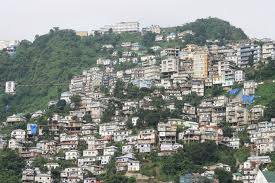
Proving true to its name as "the home of the highlanders," Aizawl, the capital of the northeastern state of Mizoram, is located at an altitude of 3500 feet above sea level. It is the seat of a rich tribal cultural extravaganza and is famous for its handicrafts. The town is blessed with exotic natural beauty. While the river Tlawng flows quietly on the east, on the north one can see the jagged hills of Durtlang.

Location And Time To Visit

Aizawl is situated towards the central part of the state and is flanked by rivers and rapids. It is at a distance of 466 km from Guwahati, 366 km from Shillong, and 140 km from Silchar. The Durtlang Hills constitute a natural barrier immediately south of Aizawl, their high ridges punctuated by Mizo villages and Christian missions, and provide pleasant rambling country. Aizawl perches precariously on the steep slopes of a sharp ridge, straddling the watershed between the Tlawng and the Tuirial river valleys at an altitude of 1100 m. Although it may lack a snowy Himalayan backdrop, it has something of the feel of a Himalayan hill station. It is generally cool during the summers with temperatures ranging from 20 to 30°C and heavy rains during the months of May to September. Winter temperatures range from 10 to 20°C. Fog is commonplace, and the first rays of the sun drive it away to make way for the mountain peaks-a sight that often attracts many tourists.

Aizawl as a town does not have a distinct past specifically. The whole state of Mizoram was a part of Asom until 1972 when it was made a Union Territory. There were insurgency problems in the region until 1987, when it was declared a state. Unusually enough, almost all problems of terrorism and demands for freedom have subsided since then. The Mizos are Christians by faith and most of them speak English. In fact, Mizoram has a literacy rate of 87%, which is the second highest in the country.

Places To Visit

The State Museum at Babu Tlang is worth visiting and one can have a glimpse of Mizo dresses, implements, historic relics, and other traditional items. The mini zoo has some rare Asian animals in it and the most important one is the endangered sun bear. The Cultural Sub-Center is a good retreat center from the cacophony of modern life and is provided with modern amenities, while providing alluring natural sights. There are a few other attractions as well. These include the zoological garden, Bung picnic spot, MAHCO Showroom, Treasury Square, Vengthlang, and Bethlehem.

Nearby

Tamdil Lake is located at distance of 85 km from Aizawl and is a good picnic spot with boating facilities. For an admirer of natural beauty, Vantwang Falls are at a distance of about 137 km, providing a breathtaking sight of water falling amidst bamboo forests. To take a fantastic view of the Myanmar hills, one can visit Champai, about 192 km from Aizawl. Luangmual is at a distance of 7 km from Aizawl and is a small village known for its handicrafts center.

Fairs And Festivals

Mizoram is known for its jhum crops and the people of the region celebrate the festivals related to it with traditional gay and pomp. In the months of February to March the clearing of the jungles to make way for sowing is celebrated through the festival of Chapchar Kut. The harvest festival is celebrated during the month of December and is called Pawl Kut. Another festival, Mim Kut, is celebrated after the maize harvest in September in honor of the departed souls. The birth of Christ, and New Year's Day are also major festivals.

The Mizos are famous for their Bamboo dance. Cheraw, Chheih Lam, Solakar or Sarlamkai are other famous dances.
 
Aizawl can prove to be a shopper's delight and the Bara Bazaar is a good stopover. This northeastern town is famous for its handicrafts, bags, weavings and other traditional items. The Weaving Center, Handloom Emporium, Bazaar Bungkawn, Thaakthing Bazaar, Ritz Market, Burma Lane, New Market, and Solomon's Cave are other important marts. Bamboo items, including cane furniture, are good buys.

How To Reach

Virtually all the visitors to Aizawl, arrive by bus from Silchar via National Highway No. 44. Most of the private buses operating on the Aizawl-Silchar route run overnight, except for Mizoram State Transport's buses that run during the day. Travelers are advised to allow sufficient time to book tickets at MST's not-so-peaceful office, near the GPO and below Zodin Square, where one can also arrange rail tickets for use on the network in Asom. The nearest major rail junction is at Lumding, a further 180 km north of Silchar. Companies operating deluxe buses to and from Silchar, as well as Shillong and Guwahati, are found in Zarkawt. The minibuses that run between central Aizawl and the suburbs head from the top of town near the GPO and Zodin Square to Chandmary in the north.

The friendly and hospitable staff of the Mizoram government’s Directorate of Tourism, Chandmary (Mon-Fri, 9 AM-5 PM), provides advice, information and transport. The tourists can book tourist lodges throughout Mizoram-including the one in Aizawl from this office. The landmark post office is on Treasury Square, near the main branch of the State Bank of India, which handles foreign exchange.

There are regular flights of Indian Airlines from Aizawl to Calcutta and the journey takes roughly two hours time. 

Where To Stay

Advanced booking is a good practice as there are a few good hotels in the area. Accommodation is cheap and so is food. There are a few good restaurants in the Bara Bazaar and Chatlaang areas. The Mizoram tourism office at Chandmary can be of a very great help for anyone visiting Aizawl for the first time.

Sunday, December 18, 2011

Mussoorie

Mussoorie


Mussoorie, like other hill resorts in India, came into existence in the 1820s or thereabouts, when the families of British colonials began making for the hills in order to escape the scorching heat of the plains. Small settlements grew into large stations and were soon vying with each other for the title of “queen of the hills.” Mussoorie’s name derives from the Mansur shrub (Cororiana nepalensis), common in the Himalayan foothills; but many of the house names derive from the native places of those who first built and lived in them. Today, well-to-do Indians own the old houses and estates, many of who follow the lifestyle of their former colonial rulers. In most cases, the old names have been retained.


Take, for instance, the Mullingar. This is not one of the better-preserved buildings, having been under litigation for some years; but it was a fine mansion once, and it has the distinction of being the oldest building in Mussoorie. It was the home of an Irishman, Captain Young, who commanded the first Gurkha battalion when it was in its infancy. As you have probably guessed, he came form Mullingar, in old Ireland, and it was to Ireland that he finally returned, when he gave up his sword and saddle. There is a story that on moonlit nights a ghostly rider can be seen on the Mullingar flat and that this is Captain Young revisiting old haunts.
There must have been a number of Irishmen settling and building with names such as Tipperary, Killarney, Shamrock Cottage and Tara Hall. “The harp that was once in Tara’s Halls” must have sounded in Shimla too, for there is also a Tara Hall in the old summer capital of India.


As everywhere, the Scots were great pioneers in Mussoorie too, and were quick to identify Himalayan hills and meadows with their own glens and braes. There are over a dozen house names prefixed with “Glen.”
The English, of course, went in for castles, there’s Connaught Castle and Grey Castle and Castle Hill, home for a time to the young Sikh prince, Dalip Singh before he went to England to become a protégé of Queen Victoria.


Sir Walter Scott must have been a very popular writer with the British in exile, for there are many houses in Mussoorie that are named after his novels and romances like Kenilworth, Ivanhoe, Woodstock (later an American mission school), Rokeby, Waverly, The Monastery. And there is also Abbotsford named after Scott’s own home.


Dickens lovers must have felt frustrated because they could hardly name their houses Nicholas Nickleby or Martin Chuzzlewit but one Dickens fan did come up with Bleak House for a name, and Bleak it is even to this day.


Mussoorie did have a Dickens connection in the 1850s when Charles Dickens was publishing his magazine Household Words. His correspondent in India was John Lang, a popular novelist and newspaper proprietor, who spent the last years of his life in Mussoorie. His diverting account of a typical Mussoorie “season,” called “The Himalaya Club,” appeared in Household Words in the issue of March 21, 1857.


It is well over 50 years since a person lived in the parsonage and its owner today is Victor Banerjee, the actor, who received an Academy Award nomination for his role in David Lean’s A Passage to India. Victor doesn’t mind his friends calling him the vicar.


This naming of places is never as simple as it may seem. Let’s take Mossy Falls, a small waterfall on the outskirts of the hill station. You might think it was named after the moss that is so plentiful around it, but you’d be wrong. It was really named after Mr. Moss, the owner of the Alliance Bank, who was affectionately known as Mossy to his friends. When, at the turn of the century, the Alliance Bank collapsed, Mr. Moss also fell from grace. “Poor old Mossy,” said his friends, and promptly named the falls after him.


Monday, August 15, 2011

UTTARKASHI

Uttarkashi town, the nerve center of the locality by the same nominate, is more on the pilgrimage circuit than the regular tourist circuit. Nevertheless, with trekking and ice climbing ahead popularity as adventure sports, the significance of this region cannot be discounted. The region has nearly high-altitude lakes and the Gangotri and Yamunotri glaciers be in front on to several major peaks to are the hunting proof in favor of serious ice climbing buffs.


Location

To the same degree the nominate suggests, Uttarkashi is considered the northern Kashi or Varanasi. The town is situated on an altitude of 1,550 m on the in shape banks of tributary Bhagirathi. It is a locality located in the extreme northern area of the northern state of Uttarakhand. Its margins besides mark the Indo-Chinese precincts. It is 155 km north of Rishikesh and 100 km from Gangotri, and is unspoken in the Garhwal hills. The winters go on from October to strut, after temperatures fall very low. The monsoons are usually practiced in the months of July and grand.


Sites to Visit

Uttarkashi, like Varanasi, is accepted as a situate in favor of Hindu pilgrimage. Like Varanasi, it too, has a Vishwanath temple. The temple has a magnificent trishul or trident, individual indicator in circumference and made of copper. It ropes a trident four meters long. Each point is all but two meters in strip. Uttarkashi is accepted in favor of its temples out-and-out to Rishi Parasurama, Datatryea, Goddess Annapurna Devi, Goddess Kali, and Bhairon. At individual era, present were 365 temples in this town. The town is besides accepted in favor of its various ashrams, which are the homes of the sanyasis and hermits.


Fairs & Festivals

On Makar Sankranti, which by and large waterfall in January, the town hosts a colorful reasonable, after deities are borne in the air into the town on palanquins from outlying villages.

Adventure Opportunities

Among the accepted treks are folks to Nachiketa Tal, Dodi Tal, Dayara Bugyal (bugyal, a high-altitude meadow), Sat Tal, Kedar Tal, Gangotri-Gaumukh-Nandanvan Tapovan and to Yamunotri (the source of the tributary Yamuna).

Nachiketa Tal can be accessed from Chaurangi-Khal (29 km from Uttarkashi town by road) and a supplementary trek of 3 km through very scenic surroundings. Accommodation is presented on Chaurangi-Khal in a PWD inspection hut. For Dodi Tal, trekkers can verve by road to Kalyani. From at this juncture individual has to verve a supplementary 5 km to Agoda. The trek to Dodi Tal (16 km) ascends slowly but surely from at this juncture through thick forests and scenic hill landscape. The lake, situated on an altitude of 3,307 m, has accommodation facilities by way of a forest remainder accommodation and a log lodge. Permits to fish in favor of trout in this region can be had from Uttarkashi.

Where to Stay

Uttarkashi offers narrow accommodation opportunities. There are mostly various ashrams everyplace charges are quite low. There are a the minority clandestine hotels as well to offer accommodation ranging from avenue to budgetary ones. The food served at this juncture is largely vegetarian, although non-vegetarian food is besides found. Intake of alcohol is not encouraged.

How to Reach

One can access Uttarkashi from Rishikesh by truck. The adjoining airport is Jolly accord in Dehradun. One can take a truck from at this juncture to Rishikesh and at that time proceed supplementary. The railhead is on Rishikesh.

Information

Tourists ought to message to unlike a visit to chairs on the tourist circuit, both provisions and delight may perhaps be dicey in this region. It is advisable therefore to fix up in favor of startling exigencies. For folks who engage in befall up in favor of serious adventure, Uttarkashi affords the go on argument in favor of stocking up provisions, medicines and other needs.

The offices of GMVN and Uttarakhand Tourism can be contacted in favor of supplementary in a row on trekking in this region, the facilities presented on various chairs and more.